Monday, 18 February 2013
Debating creationists
A couple of days ago I stupidly got into an online debate with a creationist. I have a general rule not to do this, as it's a futile waste of energy - but, probably once a year or so my willpower fails and I get dragged in!
After a bit of back-and-forth about the usual stuff the creationist - I'll call him "John", because that was his name - made the claim that evolution violated the 2nd law of thermodynamics. This immediately took me back about a decade in time to when I first had a debate online about these things and someone brought up the same argument. Even then, with no real scientific knowledge beyond what I didn't remember from school I felt that the argument was unlikely to be true. It's what got me interested in learning science again and I've spent some time since then reading and studying science with the Open University and generally taking an interest in religion, scepticism and atheism.
So I made my responses to "John" and of course they were dismissed as I fully expected they would be and I ended the conversation when he accused me of redefining the 2nd law to fit my purposes, when, whether he knew it or not, that was exactly what he had done. Now I'm back to thinking about this argument again, hence this post.
The definition that "John" had clearly been taught to trot out was that "natural systems break down over time, not improve" which, if you wanted to explain the concept to a six year old is probably ok (but even then a smart six year old would pretty quickly realise that it couldn't be that simple). As evolution increases complexity over time, it must violate the 2nd law. This simplified creationist definition missed out one very crucial element of the law which is present in the definition I then used: "in a closed system entropy always increases". Entropy very simply put is a measure of disorder, so the main difference between the two definitions is the part about a closed system. If a system is closed, i.e. no energy can enter it from outside, the energy inside it will eventually become evenly distributed throughout the system, or to put it another way, without energy input from outside, the system will inevitably become more and more disordered until it reaches a maximum point of disorder.
As a universal law, there are many ways of stating the 2nd law - in my studies with the OU I came across at least five or six that relate it to various physical processes. It was independently formulated nearly 200 years ago by Sadi Carnot and Rudolf Clausius, and has been restated in other ways by such scientific giants as Lord Kelvin and Ludwig Boltzmann. Darwin's theory of evolution by natural selection is now over 150 years old. The fact these two cornerstones of science have lasted side by side for so long might make you doubt claims that they are mutually exclusive, but this doesn't seem to worry creationists.
For evolution to violate the 2nd law, it would have to be taking place in a closed system, and that is the part the creationists leave out - for pretty obvious reasons. The system within which life on Earth has evolved is, of course, the Earth. Now I think it's safe to say that the Earth as a system does receive a not inconsiderable amount of energy from an outside source - and I know now I sound like I'm making statements of the bleeding obvious here - that source is of course the Sun.
You would think that having explained that, the creationist would say "well, stone the crows, of course you're right on that one - I'll never use that argument again". Yeah, that doesn't happen. But as it is so clearly and obviously wrong, I still think it's one of the few chances of getting a creationist at least to ponder it for a moment. But, I thought, maybe I could come up with an analogy that would make it even simpler to get. So here goes.
Saying evolution violates the 2nd law of thermodynamics is equivalent in many ways to saying a rocket launching a satellite into orbit violates the law of gravity - if that sounds ridiculous, well that's the point. Here's why. I could loosely define the law of gravity (in the same way creationists loosely define the 2nd law of thermodynamics) as something like this: "all unsupported things will fall towards the earth". Using this definition I could claim a rocket launching a satellite violates this law, hence all orbiting satellites were put there in situ by God. As before, the vague definition misses out the obvious addition of a vast supply of energy, in this case let's say it's the fuel inside a stonking great Saturn V rocket. The rocket simply uses this supply of energy to overcome the downward force of gravity. At no point does it violate the law, it simply uses energy to overcome it. The same happens with evolution - it has a vast supply of usable energy from the Sun which it uses to overcome the tendency to disorder described by the 2nd law of thermodynamics.
To push the analogy perhaps beyond useful simplicity, you could also say the creationists insistence on ignoring all the scientific evidence that supports evolution is akin to them claiming God must have put all the satellites in orbit because rockets violate the law of gravity, all the while ignoring not only rocket science itself but also the discarded "fossils" left behind by a three-stage rocket such as the Saturn V. ("Where are the transitional stages??" I hear them cry in my head).
I'd like to think that even a completely brainwashed creationist like "John" might feel a little tickle of scepticism about what they have been told if it could be explained like that - maybe put a dent in the wall of wilfull blindess or the barrage of bible verses - but I'm probably being wildly optimistic. However, next time I'm presented with the argument I'll simply say "claiming evolution violates the 2nd law of thermodynamics is just like claiming a rocket violates the law of gravity" and leave it at that. Maybe that'll get 'em thinking. It would certainly save me some time ;)

Friday, 22 June 2012
Buy a set of 5 Skeptic Magazine cover illustrations

Tuesday, 19 June 2012
The Skeptic Magazine - Robin Ince cover
When I was asked to do a caricature illustration of Robin Ince for the latest cover of The Skeptic Magazine, I knew I was going to have to come up with something different and challenging, as I've drawn Robin a couple of times before and didn't want to feel like I was just retreading old ground.
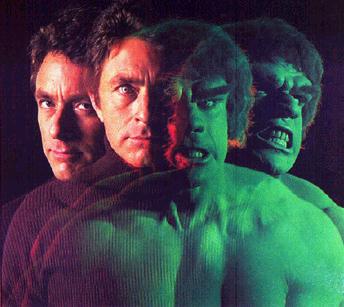
 After reading the interview that appears in the magazine, I came up with a 'multiple versions' of Robin idea - it changed a little bit in the working out, but it's close to what I had in mind. It was a tough one to do for sure. I must thank Andreas Beck for helping me out with some valuable photo reference. The initial idea was in part based on this famous pic:
 ;)
;)

Something old...
This is something I wrote on an old forum somewhere when prompted to comment on the question of 'spirituality' - I post it now as I was reminded of it by a great column in the new issue of The Skeptic Mag (more on that to follow) by Mark Duwe about the trade-off between dark skies and advancing knowledge of the stars. Subscribe here!
On the day I got married I had a very profound (for me at least) moment that might apply here. At the end of the night I walked along a short 'country lane' I suppose, between the hotel and adjoinging buildings, it was utterly black with no lights, no visible civilisation apart from the two buildings nearby.
Luckily it was a completely cloudless night. Looking up I will never forget seeing more stars in the sky than I had ever seen before by an order of magnitude, the Milky Way itself was clearly visible which was something I'd never been lucky enough to really see in that way. It was a view that was nothing less than awe inspiring, and I would recommend everyone to try to experience it.
The beauty of this sight was very moving, but it was all the more staggering for me because I actually had some concept of what I was looking at. This is what I saw:
Each and every one of those points of light in the sky is a star, equivalent to our own Sun - an enormous nuclear furnace that has been burning fuel for billions of years and will continue to burn for billions more. Some appeared quite blue in colour, some red. The blue ones are far hotter than our Sun and will use up their fuel far faster, the red ones are probably far older than the Sun and may well soon die. Some will die in the most violent way possible - a supernova, probably the most violent explosions ever seen by human eyes.
The Milky Way is the galaxy our Sun is part of. Because we are inside this immense collection of stars that looks like a spinning disk of light we see it as a band milky light across the sky - because the density of stars is so much greater as we look through the disk. There are hundreds of billions of stars in our galaxy, many of them with planets orbiting them, as is being discovered today. Who knows, maybe life exists on one of them and some other life form is gazing up at their night sky - full of completely different constellations as viewed from their planet - thinking something similar to me.
But what I could make out with my eyes that night was nowhere near the end of it - some of those points of light were not stars - at least not individual ones - some were other galaxies alogether. You can't make out the shapes of them with the naked eye, but to me they are some of the most stunning objects in the cosmos. Each one is also a collection of hundreds of billions of stars. Beyond the reach of my eyesight are billions and billions more galaxies. Each one is hundreds of thousands of light-years wide but may only appear as a tiny speck of light to the most powerful telescopes. this means they must be staggeringly far away - literally billions of light-years distant.
As a consequence of this mind boggling distance, not only are my eyes seeing something inconceivably far away, they are also looking back in time. The light from the nearest stars may have left them only a few years ago and so we see them not as they are now, but as they were then. Transfer this thought to far distant galaxies and you could be looking upon an object as it was before life even existed on Earth.
Next I think about how amazingly lucky I am to be able to appreciate the view before me in this way - just think how many people on the planet know this stuff? I'd bet it's a small minority. But what about over history? A few hundred years ago no-one would be able to have the feeling I have looking up at the night sky in such a way. The discoveries had yet to be made, the technology yet to be invented to allow people to make the discoveries. How lucky am I to have benefited from hundreds of years of other people's hard work and effort to find out what I can now read about in any decent astronomy book.
Would I call this experience 'spiritual'? In a way, yes. In a similar way to the feeling I got some moments after looking at my new wife. Intense emotions, a feeling of calm yet powerful happiness. Are these feelings more real than someone having some 'spiritual' experience in a religious way? No. Feelings can be provoked in all sorts of ways. But in my opinion they are more honest because they are based in the real world, in the here and now, will the full benefit of knowledge. To look up at the sky and think 'Wow - isn't God great!' is not to look at all. To think that all that I can see with my eyes when I look up at the sky was created for us, with humans as the planned result, is as arrogant a though as I can imagine. To think that is to abandon all hope of finding out the real answers, to give up. I don't want us to give up. I want someone two hundred years in the future to look up at the same sky with even more knowledge, even more awe and even more appreciation for all those who helped them understand what they can see in a way that I never will.
Thursday, 26 April 2012
The Davies Sphere
I read this article on io9 about artificial gravity and was reminded of the famous 'Dyson Sphere' idea dreamed up by Freeman Dyson. The article describes the concept of building a spherical space station around an artificial (very small) black hole such that the gravitation force on the station would equal the gravitational force we feel here on Earth. Cool idea, and in some ways similar to a Dyson Sphere, except that people live on the inside of a Dyson Sphere, rather than the outside of the black hole space station. We're also talking about massively different structures in terms of scale.
So what about a combination of the two ideas? A sphere built around the Sun with a radius such that the Sun provides a gravitational force on the sphere surface that equals Earth's, so that people could live on the outside? Gravity in a normal Dyson Sphere is an open question, it doesn't provide any gravity for people to use to live on the inside surface, so it's a problem to be solved. Not so with my sphere as the Sun provides the gravity. But how big would a 'Davies Sphere' (and I hereby claim eternal dibs on the idea by naming it so ;) ) have to be for the gravity on it's external surface to be equal to Earth's?
Well, I've studied a little bit of physics and so I *think* I can work it out*. The force of gravity on the surface of the Earth is roughly 9.81ms^-2, and the equation required to work that out is this:
g = GM/R^2
where G is Newton's gravitational constant, M is the mass of the Earth and R is the radius of the Earth. I want to rearrange the equation to find R (the radius of a sphere basically) by using the mass of the Sun and keeping the same value for g:
R^2 = GM/g
R^2 = (6.67x10^-11 Nm^2kg^-2) x (1.99 x 10^30kg) / 9.81ms^-2
Work that out and you get a value for R of 3.68x10^9m. Now, that's the radius of the sphere built around the Sun that would have Earth like gravity on it's surface. But that's measured from the centre of the Sun, so I need to subtract the radius of the Sun itself to get the distance between the two:
3.68x10^9m - 6.96x10^8m = 3 x 10^9m to one s.f. - in other words the sphere's surface would be about 3 billion metres, or 3 million km from the Sun. Sounds a long way, but the orbit of Mercury at it's closest to the Sun is 46 million km! So the Davies Sphere would be reeeeeaaaallly close to the Sun! I expect it would have to be made from some new super light-weight, super heat-resistant material, but hey that's not my problem, future engineers can figure the easy bit out ;)
Other thoughts about the Davies Sphere - in contrast to the Dyson Sphere, no one will be living on the inside, so the entire inside can be coated in solar energy collectors to capture the entire EM energy output of the Sun. Apart from a few 'windows', aligned with a set of massive orbiting mirrors which, when the 'windows' in the sphere allow sunlight through, reflect it back over the outside surface of the sphere. So, if opened simultaneously, the entire surface of the sphere could have a simultaneous day/night cycle.
The surface area of the Davies Sphere works out to be 1.13x10^20m^2, which is nine orders of magnitude more than the surface of the Earth - so room to move wouldn't be a problem at all! So there it is, my idea for the future of humanity - no thanks required ;)
I should really get back to work now :)
*this may well all be totally and utterly wrong. Really quite likely.
Monday, 12 March 2012
Christopher Hitchens for The Skeptic Magazine

Wednesday, 7 March 2012
Skeptic magazine cover - John Ronson

The team from The Skeptic Magazine told me they wanted Jon Ronson on the cover and that his new book The Psychopath Test was just out (it's a really good book, grab it if you can). This idea came straight away an I did a sketch, thinking that they'd think it was a bit 'out there' and I'd have to tone it down or come up with something else. Nope - they liked it and so I went for it!
The idea is pretty simple, Jon is in a school classroom having just taken a 'psychopath test' and the teacher is handing him back his score sheet with a 100% mark. The slightly mad bit is that he's dressed AND made up as The Joker from The Dark Knight - it was a bit of a challenge to caricature someone and then give them full face make up of someone totally different. I was worried the likeness would vanish under the white make up and red lipstick. I think it came out ok though. There are lots of other little things in it too which I really enjoyed putting in. Can't wait to do the next one if they still want me!
Subscribe to:
Posts (Atom)